The second time I visited Bulguksa, nothing has changed much and this wonderful temple is still an interesting place to go when you are in Gyeongju. In fact, the whole facility looks a bit more neater than I remembered. In total, I believe the high numbers of visitors made it possible to invest in preserving the temple in a good shape.
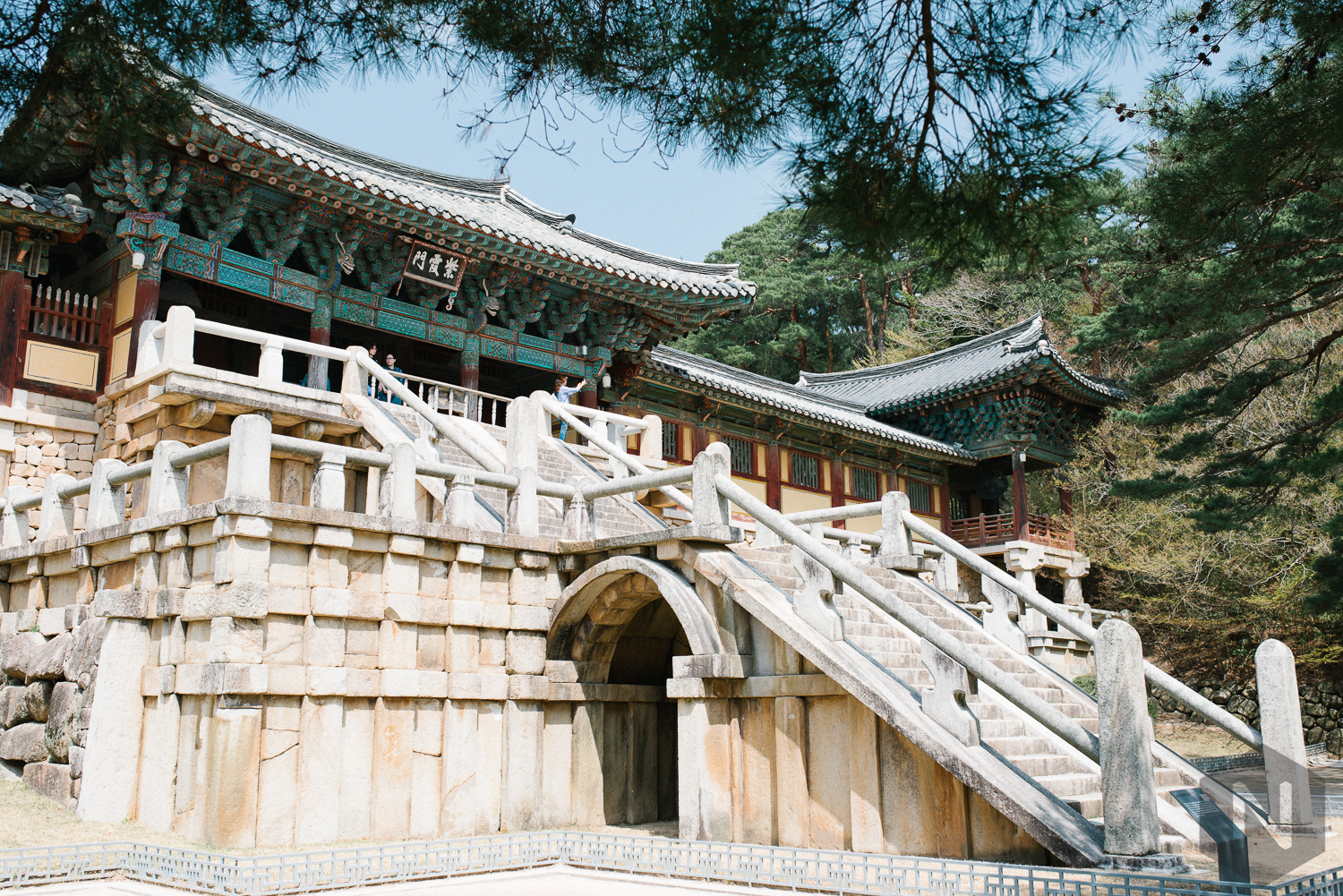
Bulguksa is a buddhist temple built between 6th and 8th century AD. It is one of the most famous sights to see in Korea, hosting some cultural assets that are listed as National treasures and are accesible to the public.
Official Homepage: http://www.bulguksa.or.kr/
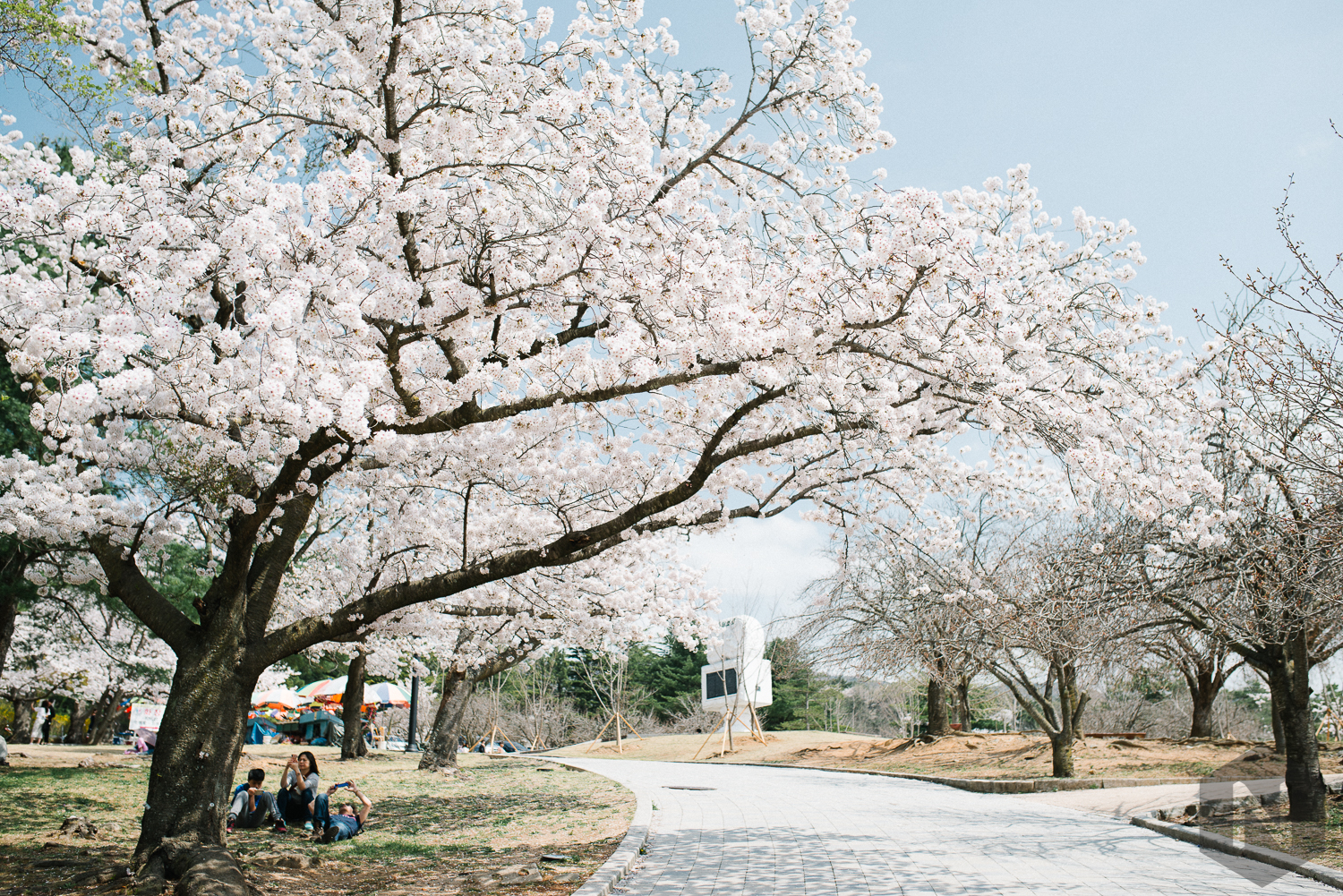
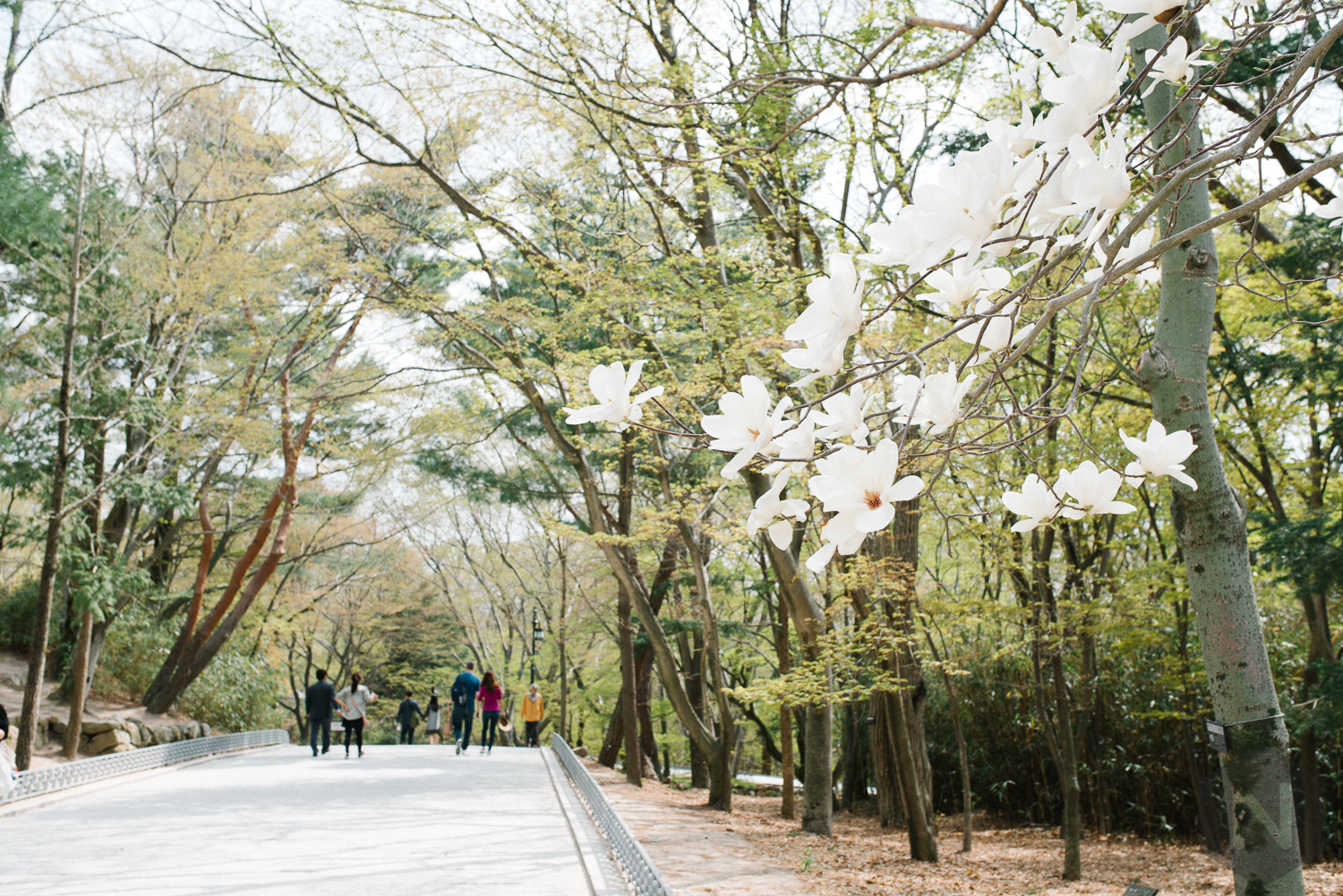
In spring, when cherry blossoms bloom and the weather becomes comfortable enough to walk outside for a longer time, people gather in parks and enjoy picnics and family time on the weekend. This is not different in front Bulguksa on the way up to the entrance.
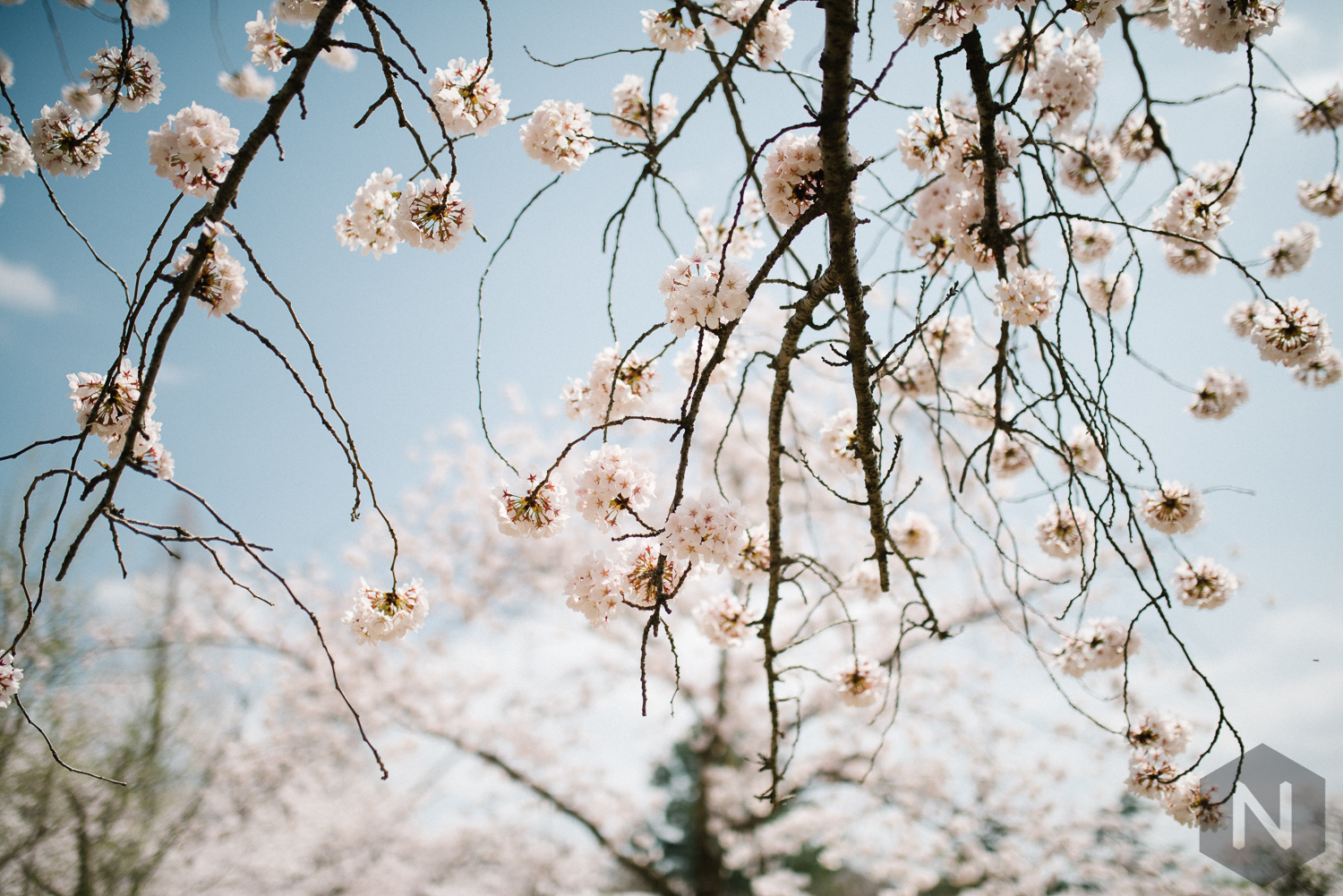
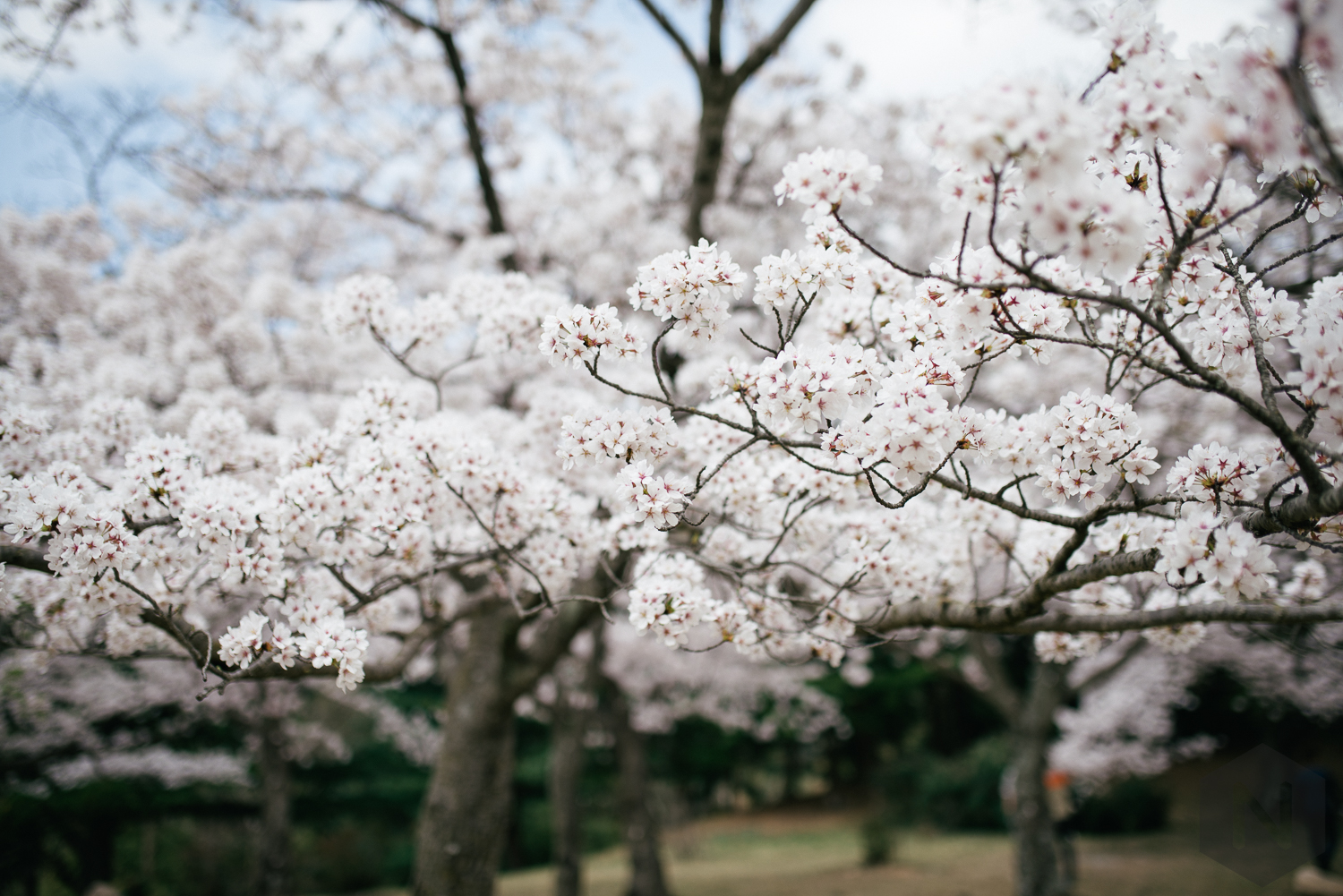
We had big luck to be in Korea at that time in Spring. It was my first spring and contrary to our visits in Winter, the mild weather allows to enjoy all outside activities much better.
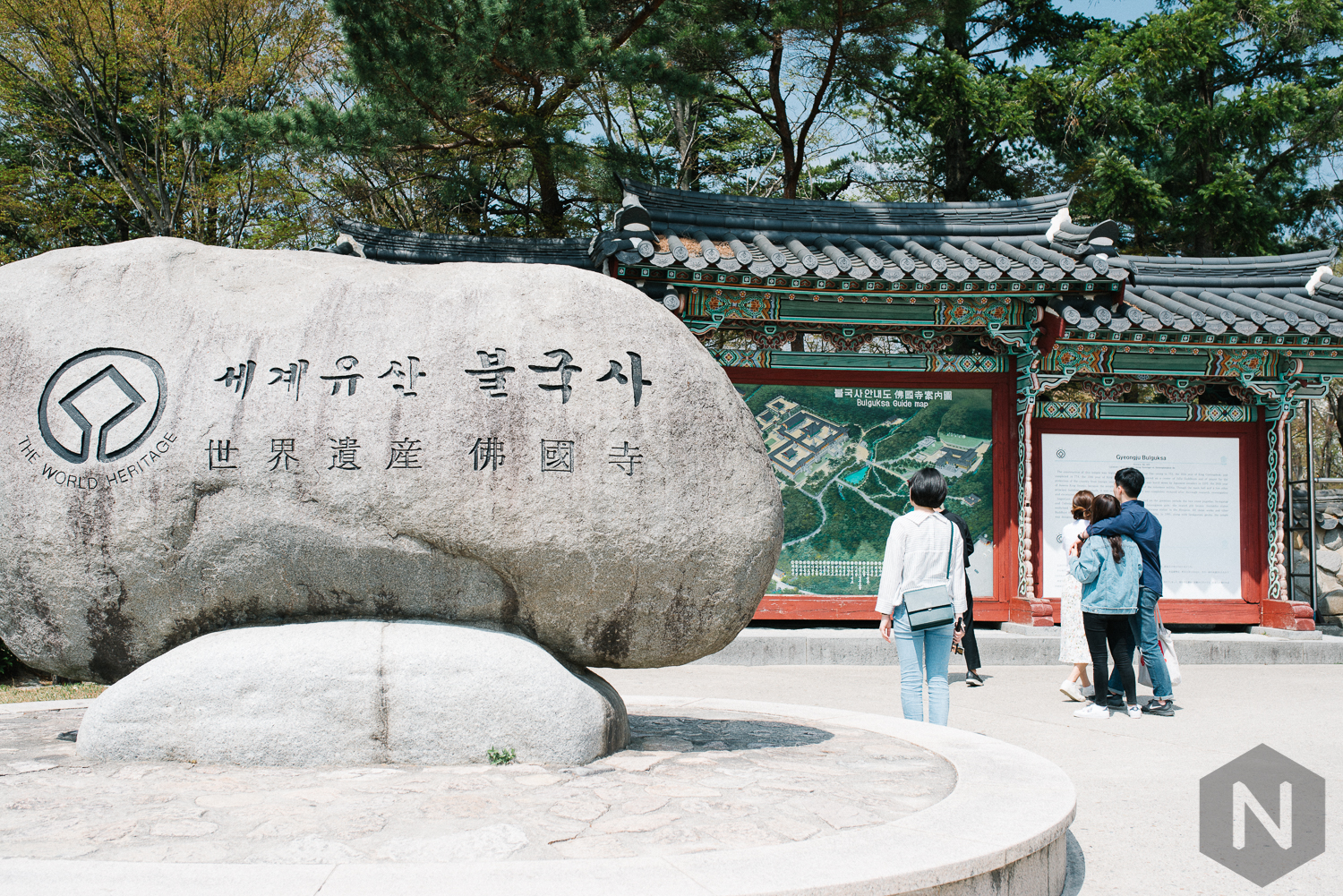
Just at the front entrance you will find a big rock marking the entrance and an orientation map.
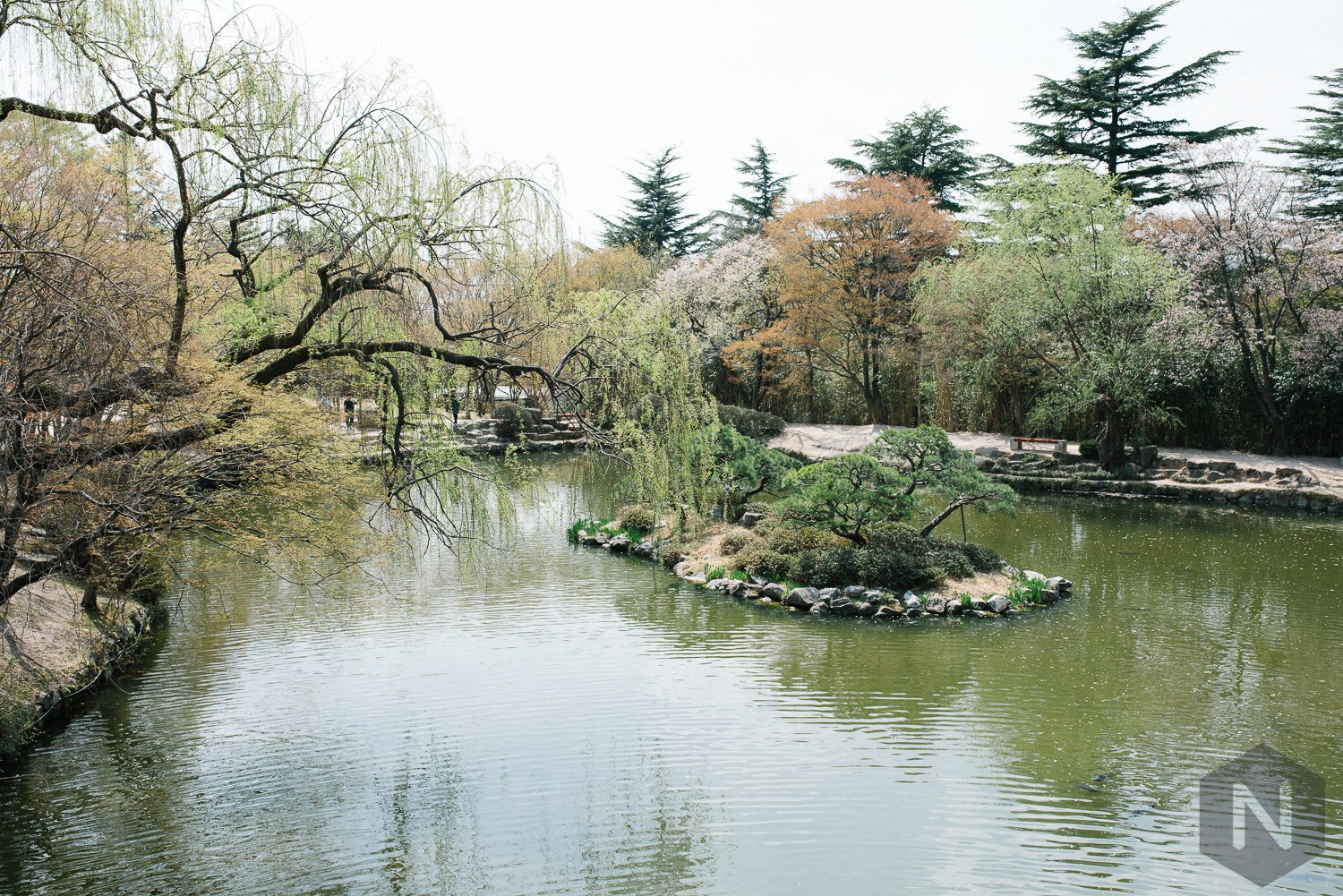
The pond inside is really scenic to walk around.
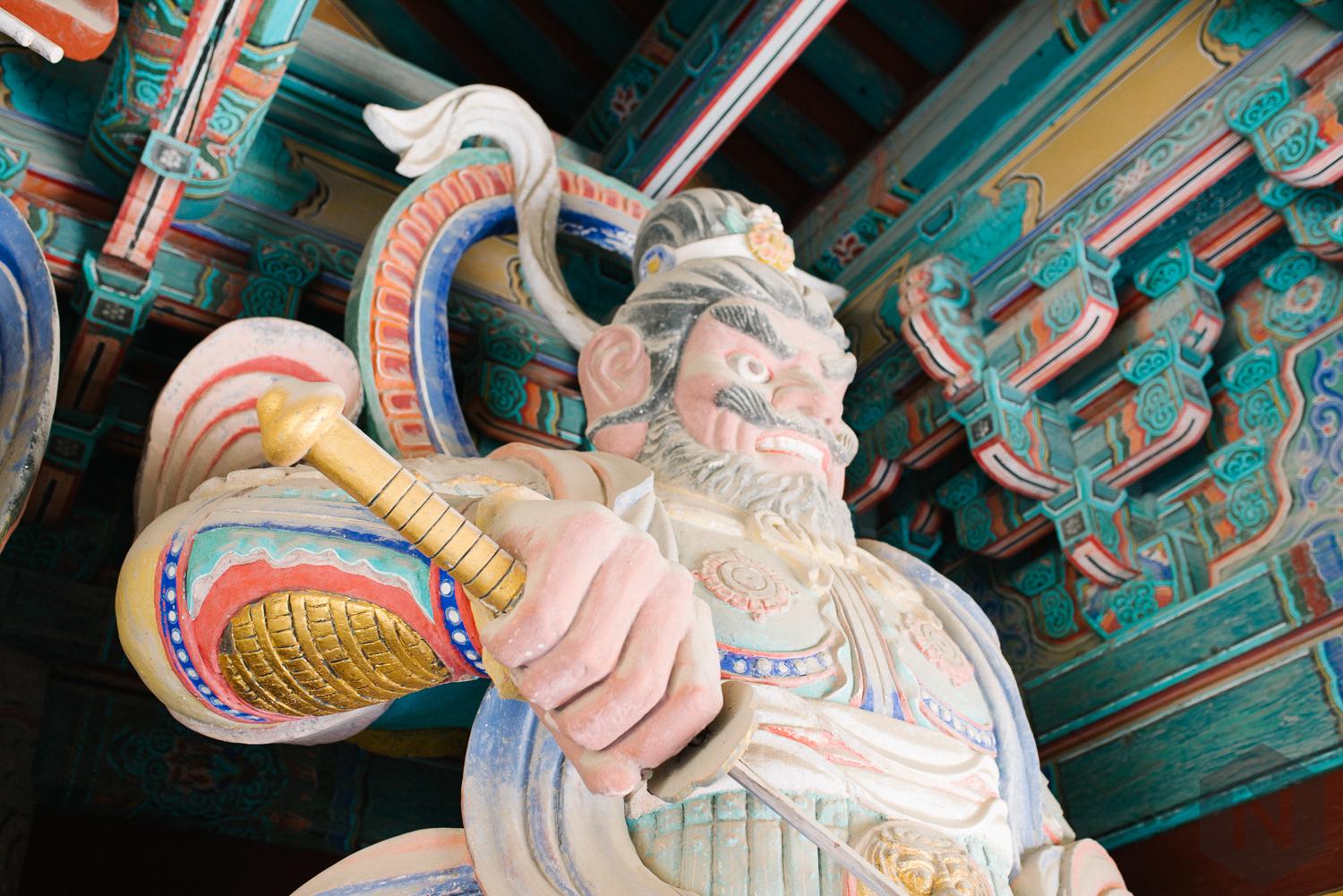
Inside on compound, you find big wooden statues at the very beginning at
Cheonwangmun Gate, kings who protect Buddha and the temple like King Dhrtarastra.
At Jaha-mun, you cannot take the stairs and walk up to the main entrance, but you can walk aside to get up to the inner temple site.
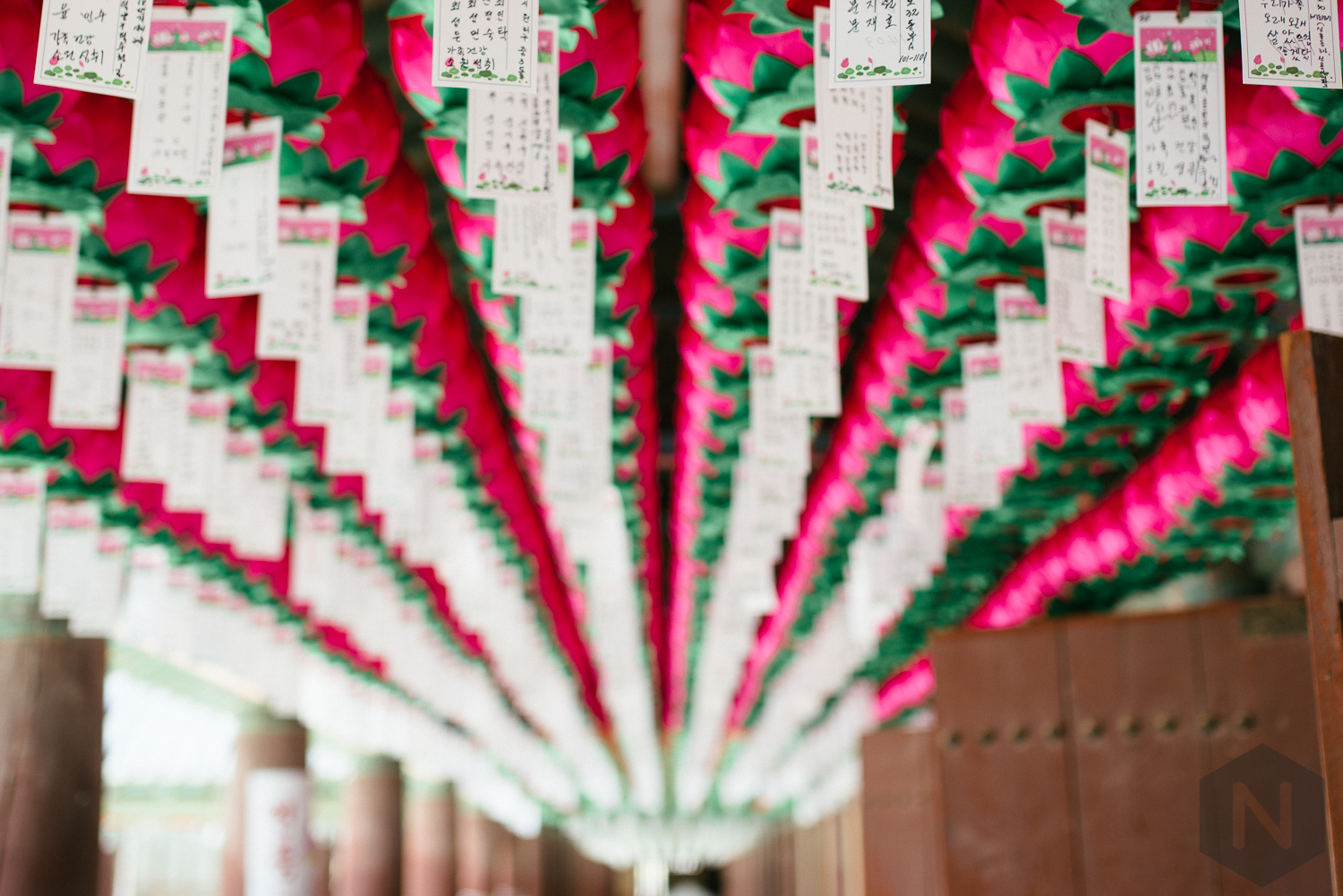
The lanterns have wishes from temple visitors attached. For example, one could wish good health to their family members, find a suitable partner or just wish peace would settle in the world.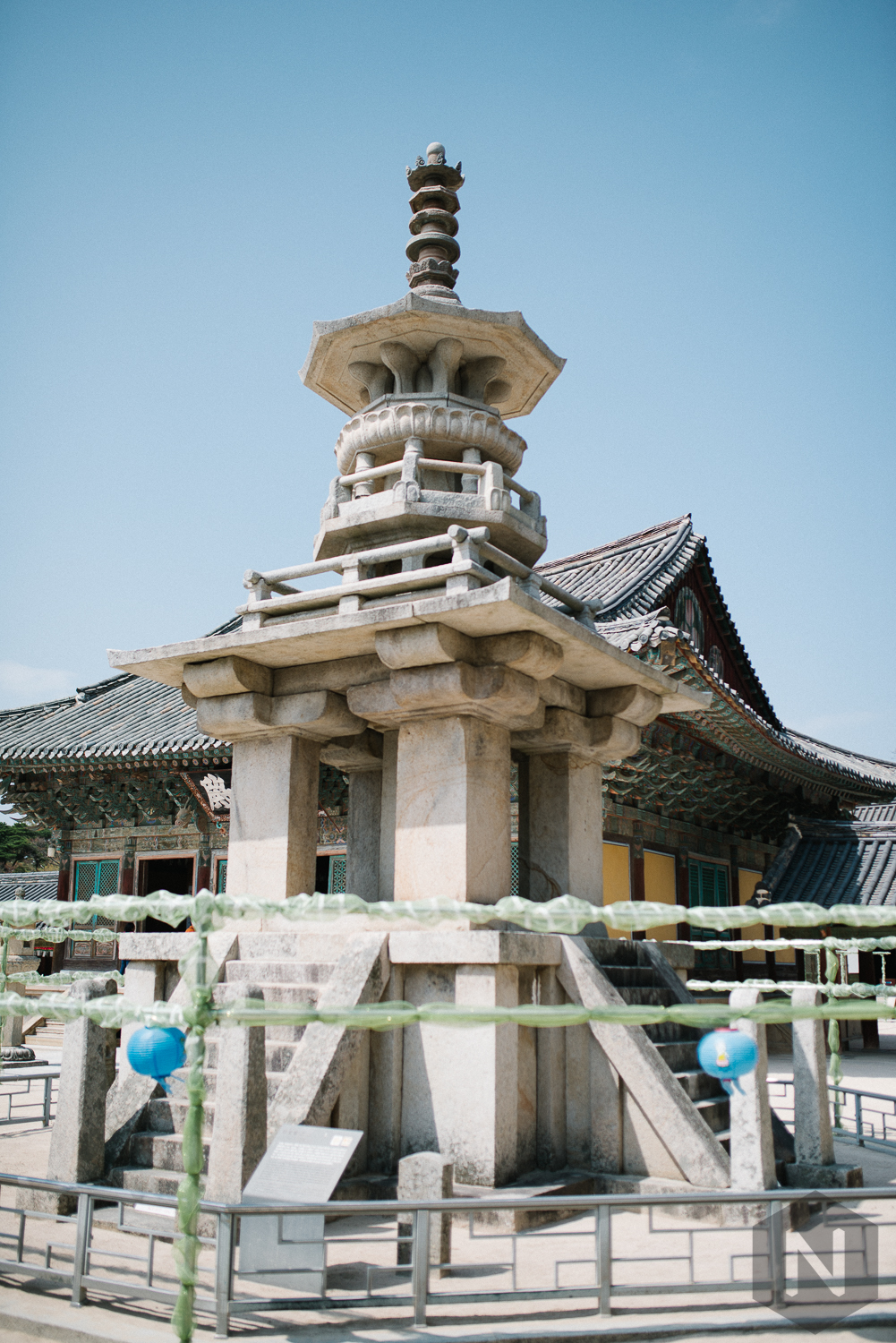
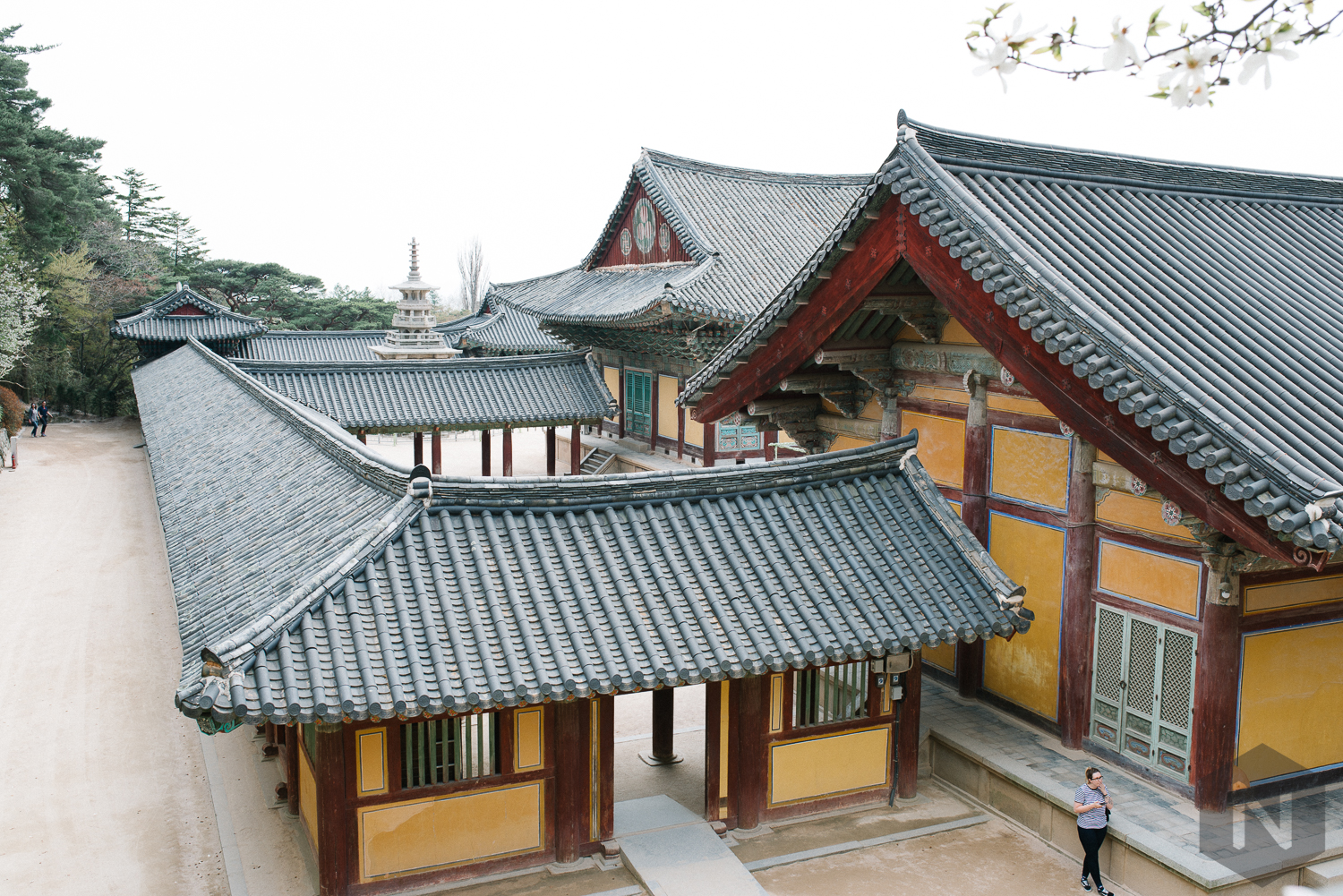
Dabotap Pagoda, one of the most famous pagodas in Korea.
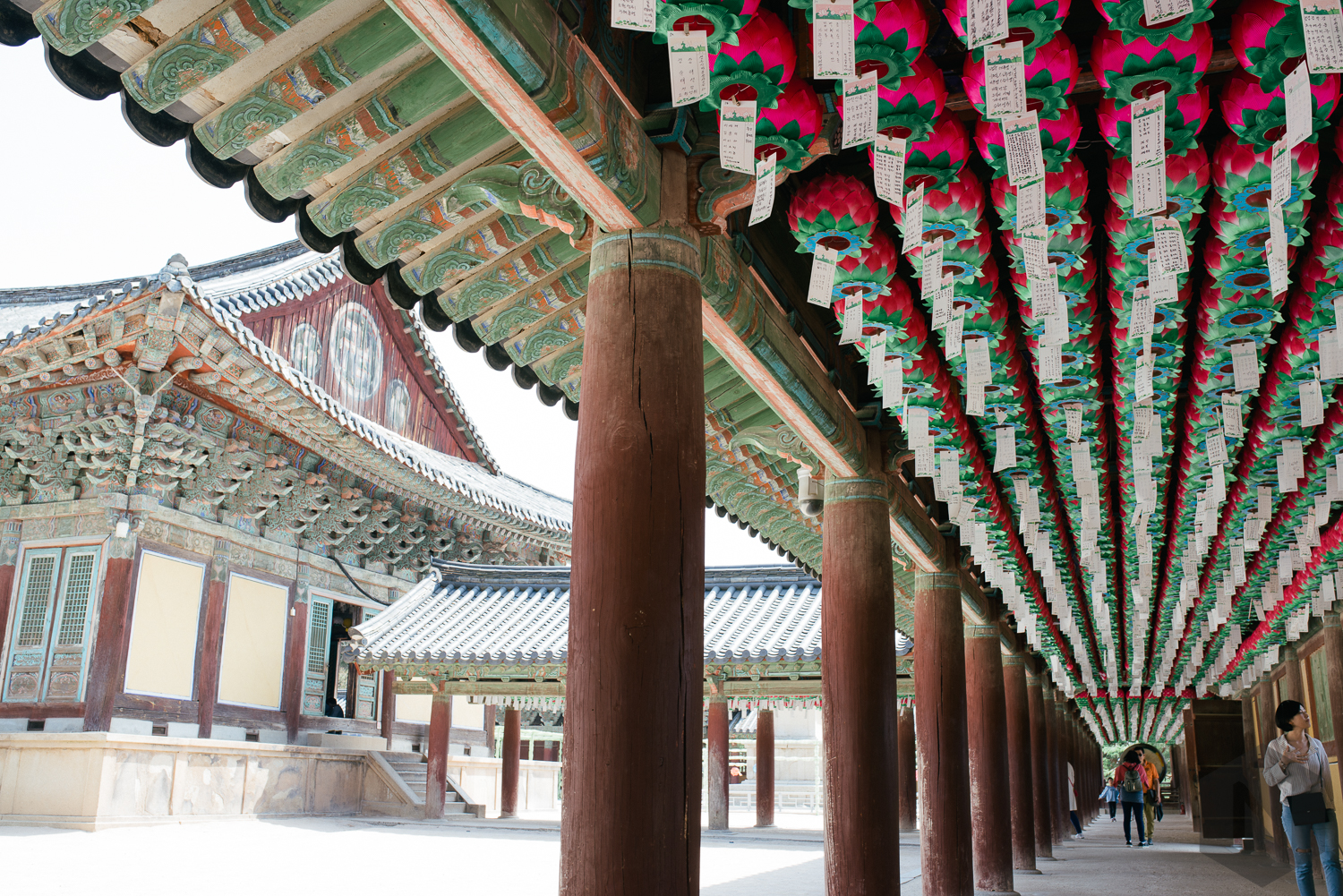
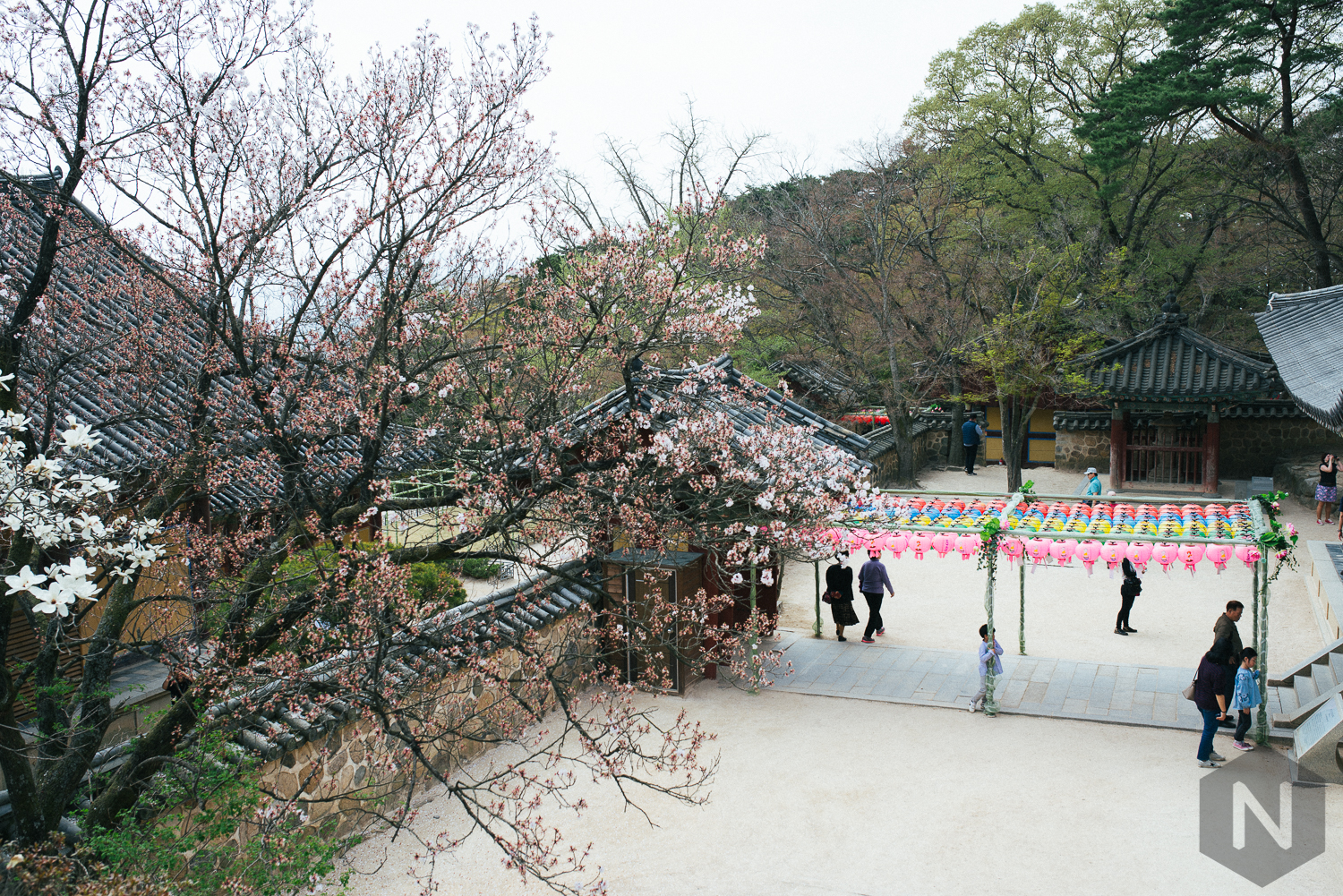
The compound is huge and it takes a while to go through all houses.
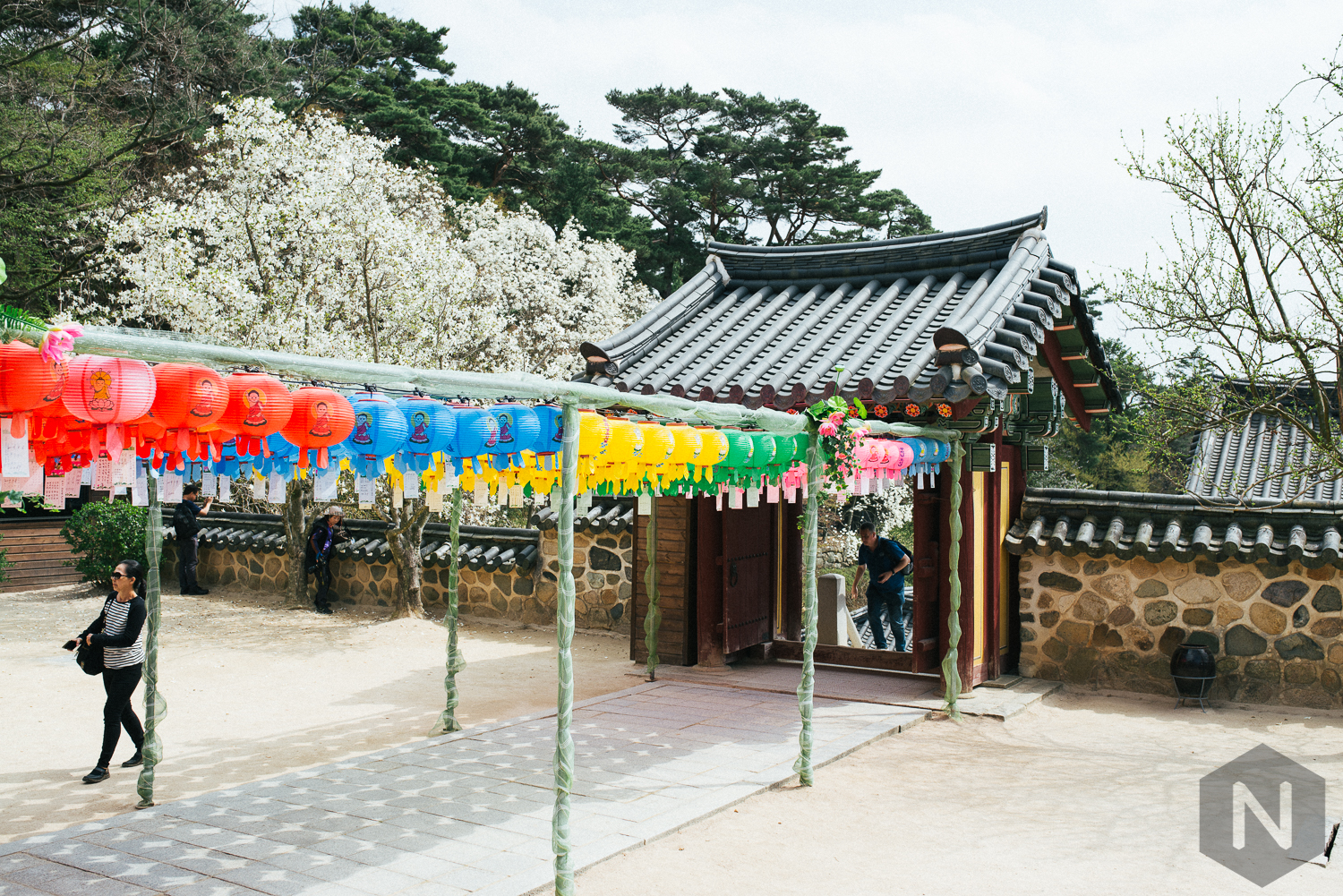
Colorful lanterns hang over the walkways.
Directions : From downtown, take a bus to the bulguksa, get off and walk for about 10minutes. There are parking lots in front and in the back of the temple.